 Vincent Van Gogh
Self
Self is some times the only subject ; Self-portrait
The Artist may create imagery that expresses their inner experience
The creator may be demonstrating an idea outside of their experience for personal gain rather than expression
Main stream media (movies, television, or PlayStation:) employ images of sex, wealth and violence to create interest or desire in the viewer
Vincent van Gogh
Vincent Van Gogh
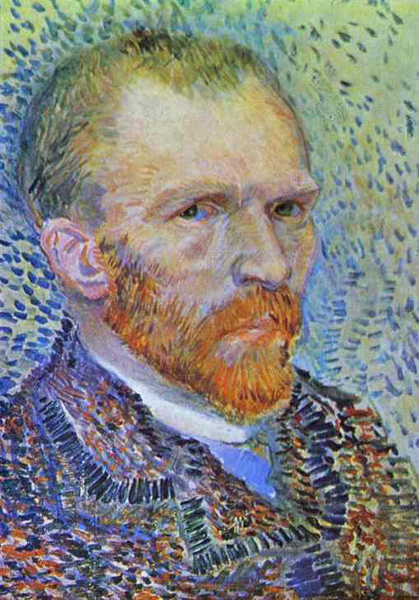
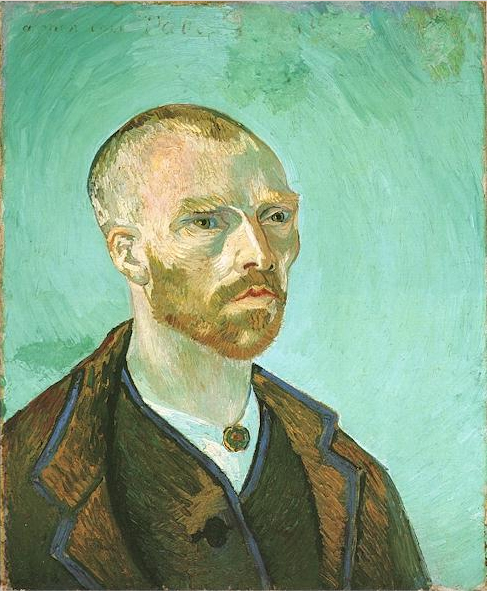
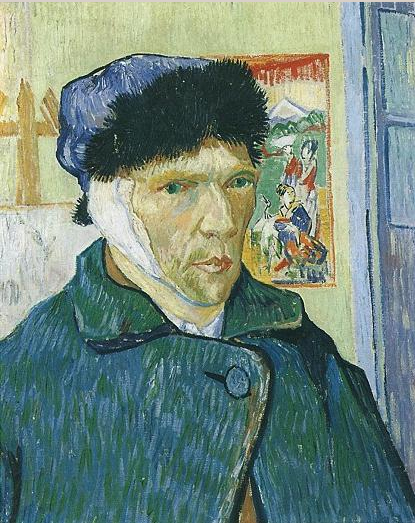
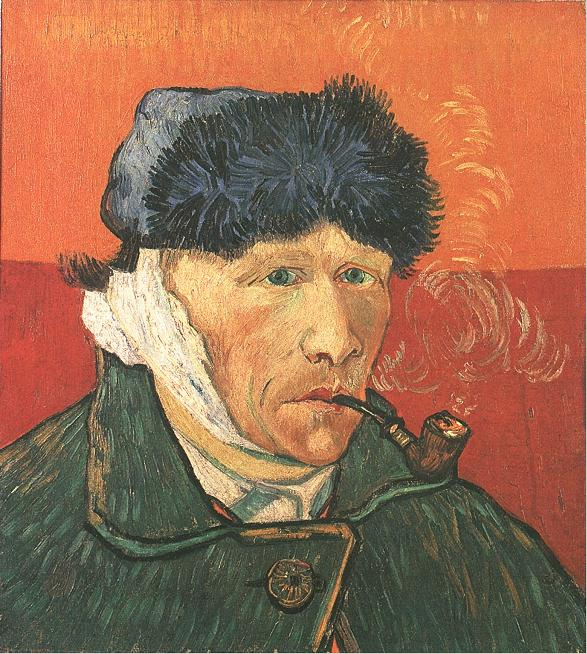
Vincent van Gogh has often been compared with Rembrandt in the number and expressiveness of his self-portraits but while Rembrandt's were distributed through a lifetime, van Gogh produced some thirty in all in the short space of five years --- from the end of the Brabant period (1885) to the last year of his life at St Rémy and Auvers. In each there is the same extraordinary intensity of expression concentrated in the eyes but otherwise there is a considerable variety. From the Paris period onwards he used different adaptations of Impressionist and Neo-Impressionist brushwork, separate patches of color being applied with varying thickness and direction in a way that makes each painting a fresh experience.
Frida Kahlo
Mexican, 1907-1954
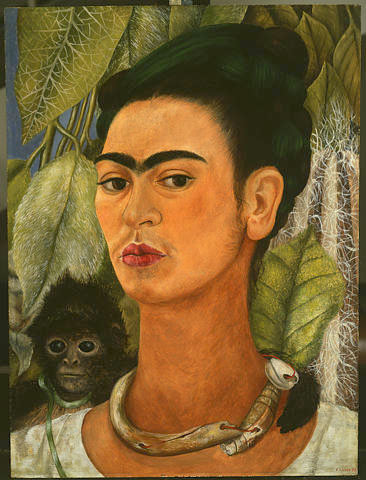
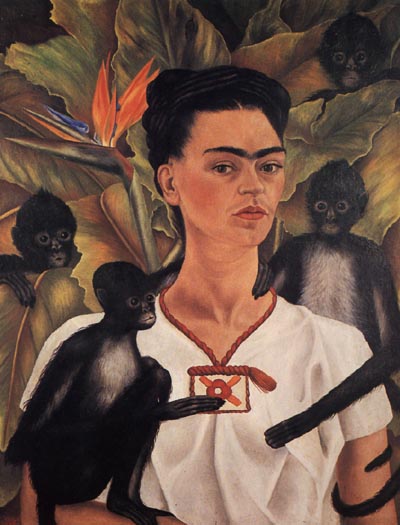
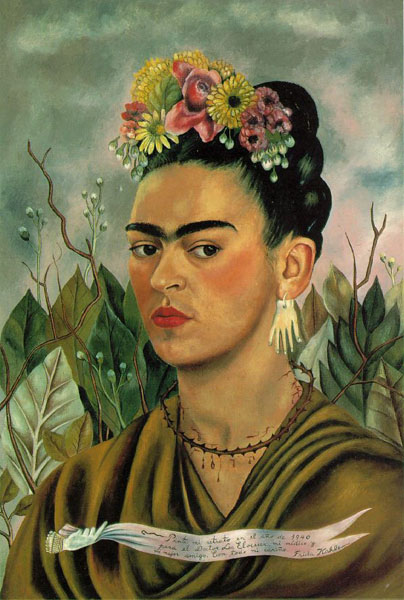
1943.jpg)
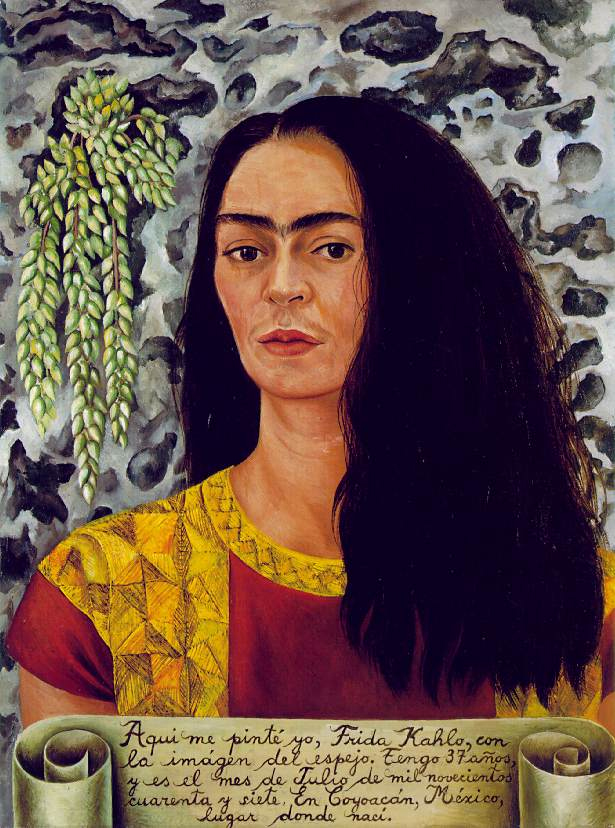 Frida Kahlo
From 1926 until her death, the Mexican painter Frida Kahlo created striking, often shocking, images that reflected her turbulent life.
She did not originally plan to become an artist. A polio survivor, at 15 Kahlo entered the premedical program at the National Preparatory School in Mexico City. However, this training ended three years later when Kahlo was gravely hurt in a bus accident. She spent over a year in bed, recovering from fractures of her back, collarbone, and ribs, as well as a shattered pelvis and shoulder and foot injuries. Despite more than 30 subsequent operations, Kahlo spent the rest of her life in constant pain, finally succumbing to related complications at age 47.
During her convalescence Kahlo had begun to paint with oils. Her pictures, mostly self-portraits and still lifes, were deliberately naive, filled with the bright colors and flattened forms of the Mexican folk art she loved. At 21, Kahlo fell in love with the Mexican muralist Diego Rivera, whose approach to art and politics suited her own. Although he was 20 years her senior, they were married in 1929; this stormy, passionate relationship survived infidelities, the pressures of Rivera's career, a divorce and remarriage, and Kahlo's poor health. The couple traveled to the United States and France, where Kahlo met luminaries from the worlds of art and politics; she had her first solo exhibition at the Julien Levy Gallery in New York City in 1938.
Kahlo enjoyed considerable success during the 1940s, but her reputation soared posthumously, beginning in the 1980s with the publication of numerous books about her work by feminist art historians and others. In the last two decades an explosion of Kahlo-inspired films, plays, calendars, and jewelry has transformed the artist into a veritable cult figure.